Dicevaders Guide: Master Alien Invasions and Dice Tactics
Discover how to dominate in Dicevaders with our comprehensive guide. Learn expert strategies for dice manipulation, unit drafting, and roguelike success.
Published: Dicevaders Wiki Editorial Team
Table of Contents
The alien invasion has begun, and the fate of the planet rests entirely in your hands—or rather, on your dice. Dicevaders has quickly established itself as a must-play roguelike deckbuilder, challenging players to move beyond mere chance and embrace high-level tactical planning. Whether you are a veteran of the genre or a newcomer, understanding the core mechanics of this title is essential to achieving victory.
In this guide, we dive deep into the systems that make Dicevaders a standout experience. From managing your alien army on the grid to manipulating dice rolls for maximum impact, we cover everything you need to know to climb the ranks and outsmart the legendary pilots defending Earth.
Understanding the Core Mechanics of Dicevaders
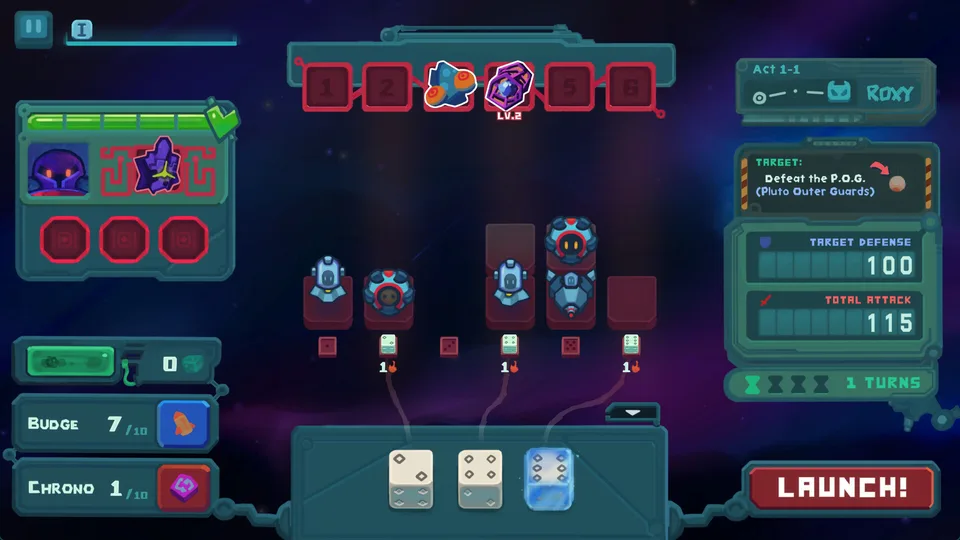
At its heart, Dicevaders is a game about resource management and spatial reasoning. Unlike traditional deckbuilders where cards dictate your actions, here, the dice are your primary engine. You aren't just rolling for luck; you are actively shaping your outcomes.
The game revolves around the "Chrono" and "Budge" mechanics. These tools allow you to reroll dice, restock your shop, and shift values to create specific combinations. Success depends on your ability to see the board not as a static environment, but as a dynamic puzzle waiting to be solved.
Key Gameplay Elements
Feature
Function
Strategic Importance
Chrono
Reroll/Restock
Essential for finding missing pieces of a combo.
Budge
Dice Manipulation
Allows precise control over your dice outcomes.
Grid Placement
Spatial Strategy
Determines your scoring potential and unit synergy.
Commanders
Specialized Buffs
Defines your playstyle and XP scaling path.
Drafting Your Unstoppable Alien Army
Building a successful invasion force requires balancing immediate power with long-term scaling. Every turn, you are presented with units, artifacts, and upgrades. The most common mistake beginners make is drafting units that provide high individual stats without considering how they interact with their neighbors on the grid.
According to community reports, the most consistent runs focus on "synergy chains." Instead of picking the strongest unit available, look for units that gain bonuses from specific dice values or adjacent placements.
Unit Synergy Tiers
Synergy Type
Focus
Best For
Value Scaling
Dice number manipulation
Long-term damage output
Adjacency Buffs
Grid positioning
Early-game board control
Combo Multipliers
Pairs, triples, quadruples
Boss encounters
Tip
Prioritize Synergy Over Raw Power
Always evaluate how a new unit fits into your existing grid. A lower-stat unit that triggers a multiplier is almost always better than a high-stat unit that sits in isolation.
Advanced Dice Manipulation Tactics
Dicevaders turns the concept of "RNG" on its head. By using the Budge and Chrono mechanics effectively, you can effectively mitigate bad luck. If you find yourself frequently losing to the StarVaders pilots, it is likely because you are spending your Chrono too early in the turn.
Wait until you have drafted your core units for the round before committing your rerolls. This ensures that your resource expenditure is directed toward completing specific, high-value combos rather than fishing for arbitrary high numbers.
Step-by-Step Dice Control
Analyze the Grid: Identify which unit placements offer the highest score.
Set Initial Dice: Place your mandatory units first.
Use Budge: Adjust dice to match the requirements of your placed units.
Finalize with Chrono: If the results are still suboptimal, spend Chrono to reset the shop or reroll specific dice.
Navigating the StarVaders Universe
The game’s setting, the StarVaders universe, is more than just flavor text; it dictates the challenges you will face. As you progress, legendary pilots will intervene to disrupt your grid. These pilots are designed to counter specific strategies, meaning you must remain flexible.
If you find yourself stuck, check out the Official Dicevaders Steam Page for the latest community discussions and update notes. Developers often release balance patches—like the recent CH6 balance update—that change how certain units interact with pilot abilities.
Common Mistakes to Avoid
Even experienced roguelike players can struggle when transitioning to this game’s unique rhythm. Here are the most frequent pitfalls we’ve identified:
Over-committing to a single combo: If the shop isn't giving you the units you need, pivot your strategy early.
Ignoring Artifacts: Artifacts provide passive bonuses that can make or break a run in the late game.
Neglecting Placement: A unit's power is often tied to its position on the grid. Always double-check your coordinates before finalizing your turn.
Frequently Asked Questions (FAQ)
Q: Is Dicevaders a turn-based game?
A: Yes, it is a turn-based roguelike deckbuilder. This allows you to carefully consider your moves and dice manipulations without the pressure of a real-time clock.
Q: Can I play Dicevaders on the Steam Deck?
A: Yes, the game is verified for Steam Deck, making it an excellent choice for handheld play.
Q: How do I get better at Dicevaders?
A: Focus on mastering the Budge and Chrono mechanics. Learning how to manipulate your dice rolls is the single most important skill for achieving higher scores and overcoming difficult pilot encounters.
Q: Are there different commanders to choose from?
A: Yes, each commander offers a unique strategic approach, specialized synergies, and individual XP scaling, allowing for significant replayability.